

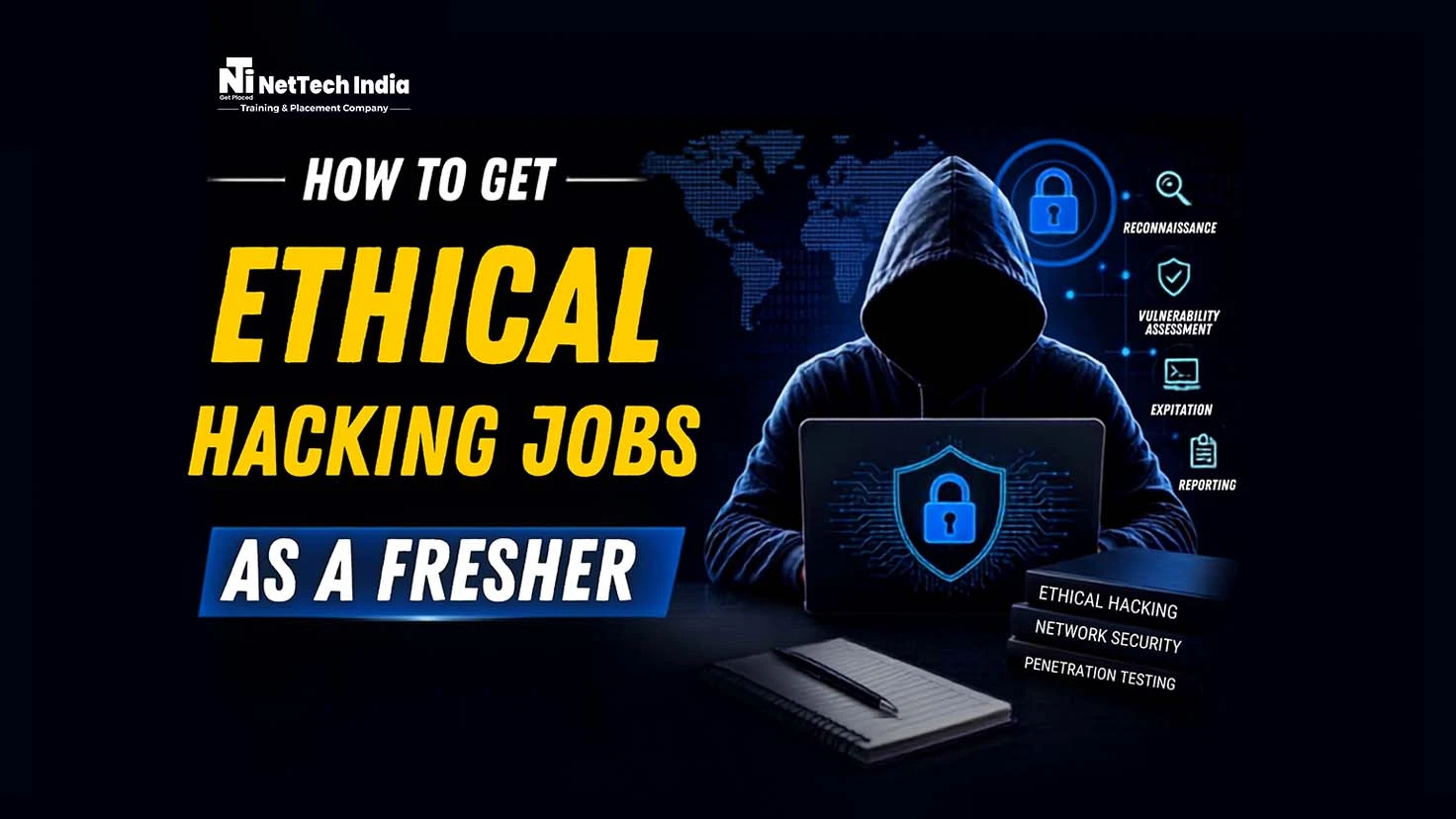
Ethical Hacking jobs are in high demand due to the growing need to protect data and systems. Companies are constantly looking to hire ethical hackers due to increasing cyber threats. However, freshers may find it difficult to showcase their skills to employers without any work experience.
To overcome this challenge, you need to follow a structured path. The following steps serve as the ethical hacking roadmap so that you get ethical hacking jobs as a fresher without any obstacles:
Step 1: Build Strong Cyber Security Fundamentals
Before learning advanced hacking techniques, focus on learning the ethical hacking meaning and its basics. Learn how computer networks, operating systems, and security mechanisms work.
Key topics you should learn are:
- Networking fundamentals
- TCP/IP and common protocols
- Windows and Linux operating systems
- Cyber security concepts and terminology
Having strong ethical hacking basics will help you understand advanced ethical hacking concepts more easily.
Step 2: Learn Ethical Hacking Skills
Once you gain a strong understanding of the ethical hacking meaning and its fundamentals, start learning ethical hacking tools and techniques.
Focus on areas such as:
- Vulnerability Assessment
- Penetration Testing
- Web Application Security
- Network Security
- Security Testing Tools
Focus on gaining hands-on exposure through a practical ethical hacking course in Mumbai. Companies no longer seek candidates with theoretical knowledge but prefer individuals who can identify and evaluate security vulnerabilities in real-world environments.
Step 3: Strengthen Your Skills Through Real-World Practice
The practical training you receive during an ethical hacking course in Mumbai provides a strong foundation, but you must practise consistently to become job-ready.
To build confidence and improve your technical skills, you can:
- Work on cyber security projects assigned during training
- Participate in Capture The Flag (CTF) competitions
- Practise vulnerability assessment and security testing in authorised environments
- Explore real-world cyber security scenarios and case studies
Regular hands-on practice with ethical hacking tools helps you develop problem-solving abilities. After the course, you can explore ethical hacking internship opportunities to get real-world exposure.
Step 4: Earn Industry-Recognised Certifications
Certifications can strengthen your resume and validate your knowledge. They show recruiters that you have invested time in learning industry-relevant skills and practical cyber security concepts.
Benefits of earning an ethical hacking certification include:
- Demonstrates your commitment to learning cyber security and ethical hacking.
- Validates the practical skills and knowledge you have gained during training.
- Enhances your resume and helps you stand out from other job applicants.
- Increases your credibility with recruiters and hiring managers.
- Improves your confidence when applying for jobs and ethical hacking internships.
- Helps showcase your expertise in vulnerability assessment, penetration testing, and security testing.
An ethical hacking certification combined with hands-on training and practical project experience can significantly improve your chances of securing ethical hacking jobs as a fresher.
Step 5: Create a Strong Resume and Portfolio
Your resume should highlight the skills and projects you have completed during your ethical hacking training in Mumbai to get better ethical hacking jobs.
Mention the following in your resume/portfolio:
- Technical skills
- Ethical Hacking projects
- Ethical Hacking Certifications
- Lab work and practical experience
A portfolio showcasing your projects and strong ethical hacking skills can help you stand out, even if you do not have professional work experience.
Step 6: Prepare for Ethical Hacking Interviews
Before applying for ethical hacking jobs, spend time preparing for technical interviews.
You can practise common interview topics including:
- Networking concepts
- Linux commands
- Cybersecurity Fundamentals
- Web application vulnerabilities
- Penetration testing methodologies
Employers also check your analytical thinking and problem-solving abilities, so you should also practice explaining your approach to security challenges.
Step 7: Apply for Entry-Level Ethical Hacking Jobs
You can opt for an ethical hacking course with placement opportunities to get your first ethical hacking job quickly.
Explore positions like:
- Ethical Hacker Trainee
- Security Analyst
- SOC Analyst
- Vulnerability Assessment Analyst
- Junior Penetration Tester
These roles provide real industry exposure and create opportunities for career growth in cyber security.
Conclusion
Getting ethical hacking jobs as a fresher is possible when you follow the right learning path. Practical ethical hacking training, hands-on labs, and career-focused guidance equip you with the skills and confidence that you need to pursue ethical hacking jobs in today’s competitive job market.
FAQ
Is ethical hacking a good career?
Yes, ethical hacking is a well-paid career with high demand in various industries. With cyber threats growing exponentially, companies need the expertise of ethical hackers to protect their systems and data.
What are the ethical hacking course fees and duration?
Different institutes charge different ethical hacking course fees. Most ethical hacking courses range from a few weeks to several months; However, the actual duration depends on the curriculum, mode of learning, and other factors.
What is the difference between cyber security and ethical hacking?
Ethical hacking is a type of cyber security. Cyber security is the practice of protecting networks, systems and data from threats, and ethical hacking is the practice of discovering security vulnerabilities and reporting them.
What are the types of ethical hacking?
Common types are web application penetration testing, network penetration testing, cloud penetration testing, social engineering testing, wireless penetration testing, physical security testing, mobile application security testing, and red teaming.